Emergency Leak Guide: 4 Steps to Take IMMEDIATELY
It’s 2:00 AM during a Nor'easter, and you hear it: drip, drip, drip.
Discovering a roof leak during a storm is stressful. But panic won't stop the water. As Boston’s trusted emergency roofing team, we want you to know exactly how to manage the situation until we can get our trucks to your driveway.
Step 1: Contain the Water (Interior)
Don't worry about the roof yet—save your living room.
Clear the area: Move furniture and electronics away from the drip.
The Bucket Trick: Place a bucket under the leak. Pro Tip: Place a string or a board inside the bucket so the water hits that instead of the bottom—it stops the loud "pinging" sound so you can actually sleep.
Step 2: Relieve the Ceiling Pressure
If you see a bubble or bulge in your drywall ceiling, water is pooling there. It looks scary, but you need to pop it.
Why? If the water spreads, it will collapse the entire ceiling sheet.
How: Use a screwdriver or pencil to poke a small hole in the center of the bulge. Catch the water in your bucket. This minimizes the repair area to a dime-sized hole rather than a 4x8 sheet of drywall.
Step 3: Tarping (If Safe)
WARNING: Do not climb on an icy or wet pitched roof during a storm. It is not worth your life. However, if the leak is accessible from a flat area or an attic:
Interior Patch: You can sometimes smear roofing cement or use a waterproof patch on the underside of the roof deck (in the attic) as a temporary stop-gap.
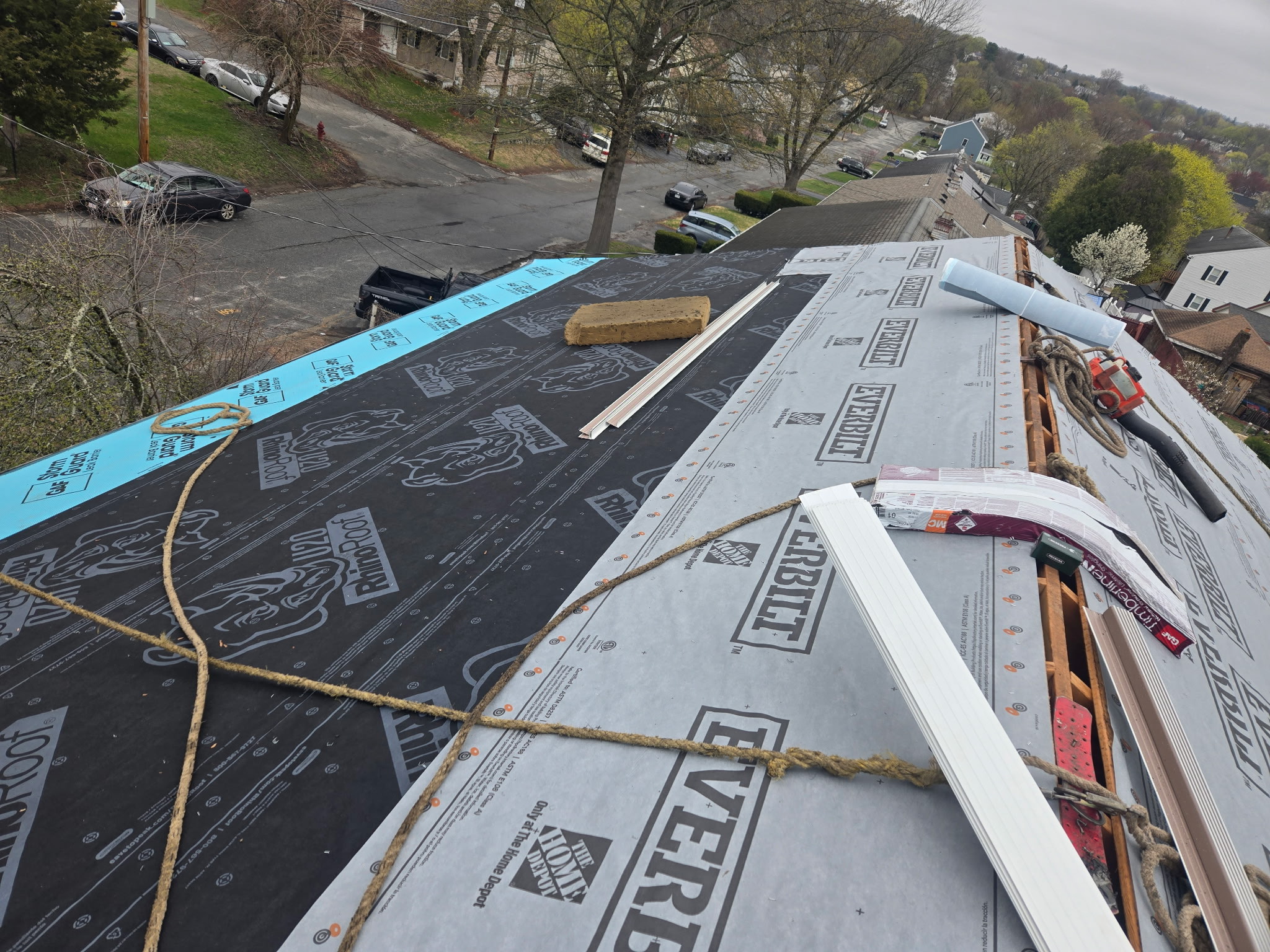
Exterior Tarp: If the storm passes and it is safe, a tarp must be secured over the ridge (the peak) of the roof to prevent water from running underneath it.
Step 4: Call a Local Professional
"Storm chasers" often flood the area after big weather events. Be wary of out-of-state plates. You need a company that will be here next year to honor the warranty.
Need help right now?
offers emergency tarping and repair services. Call our 24/7 line: (781)-650-7458


