
The Roof Was Still Strong. The Details Needed Attention.
This Winchester homeowner wasn’t expecting a major roofing problem.
But a closer inspection revealed a few details that were worth addressing before they became bigger issues.
SNAPSHOT
A Good Roof With a Few Vulnerable Details
The inspection showed a premium-style shingle roof in good overall condition. Most of the roofing surface was lying properly, and there was no evidence of widespread failure.
The concerns were limited to a few exterior details that play an important role in keeping water, debris, and weather away from the home.
Addressing those areas now allowed the homeowner to protect the larger roofing system without taking on unnecessary replacement work.


The Dormer Trim Needed Better Protection
Several dormer fascia and trim areas were unfinished or missing protective aluminum or PVC coverage. The exposed wood already showed peeling and surface wear.
Because these edges sit high on the roof and face repeated rain, sun, and snow exposure, leaving the wood uncovered could lead to continued deterioration.
Protecting the trim would help reduce moisture exposure and future maintenance around the dormer.
A roof can remain serviceable overall while one low-slope section or flashing detail develops a serious leak. Identifying the actual failure area helps avoid unnecessary work elsewhere.
Rebuilding the
Chimney Flashing
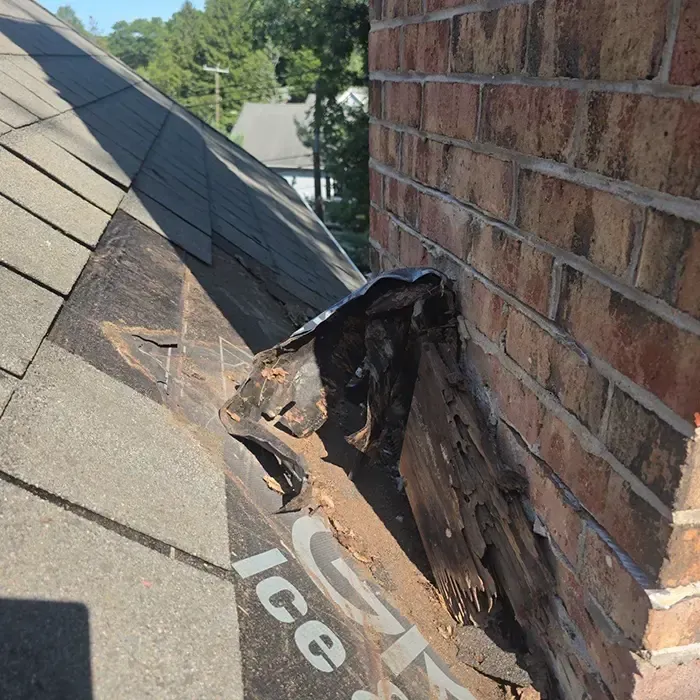
The chimney area needed a more dependable water-management detail.
The approved work called for removing the existing flashing and installing a complete new system where the roof meets the chimney.
That process included ice and water protection, new step flashing, apron flashing, a back pan, and properly secured counterflashing.
Rebuilding the system this way creates a cleaner, more durable transition than relying on surface sealant or another temporary patch.




Clearing the Drainage Path
Tree debris had collected in several gutters and valley discharge areas. When those pathways become restricted, water can slow down, overflow, or remain near roof edges longer than intended.
The gutter cleaning removed leaves and buildup, restored water flow, and gave the crew an opportunity to flush the system and check for remaining blockages.
Gutter guards were also identified as a practical future option because of the surrounding tree coverage.
Why Targeted Maintenance Made Sense
The inspection did not support replacing a roof that was still in good overall condition. The better approach was to correct the specific details most likely to allow moisture or debris-related problems.
By reflashing the chimney and restoring drainage, the homeowner addressed the higher-priority risks while preserving the existing roof.
The remaining items such as protective trim coverage, the isolated missing shingle, and light moss could be handled as focused maintenance rather than a full roofing project.


The Finished Result
The completed work strengthened the areas most vulnerable to water and debris while leaving the serviceable roofing system in place.
The chimney now has a more complete flashing system, the gutters can move water more effectively, and the homeowner has a clear plan for the remaining trim and localized maintenance items.
This project is a good example of what an education-first inspection should provide: a practical recommendation based on the actual condition of the home not a larger project than the roof needed.

Not Every Roof Concern Requires a New Roof
A detailed roof inspection can separate routine maintenance from urgent repairs and larger replacement needs.
Peak Quality Roofing documents the conditions, explains what they mean, and recommends the work that makes sense for the home without pressure.

Frequently Asked Questions
Does an exposed dormer fascia need to be covered?
Exposed wood can weather, peel, and absorb moisture over time. Aluminum or PVC coverage helps protect the fascia and trim while reducing future painting and maintenance needs.
Why is chimney reflashing better than adding more sealant?
Sealant can be useful in limited details, but it is not a substitute for a complete flashing system. Proper step flashing, apron flashing, back-pan flashing, and counterflashing direct water away from the roof-to-chimney connection more reliably.
Can clogged gutters affect the roof?
Yes. Debris can slow drainage, cause overflow, and keep water near roof edges or valley discharge areas. Regular cleaning helps the roof and gutter system move water away from the home as intended.
Are gutter guards helpful for homes surrounded by trees?
They can reduce the amount of leaves and larger debris entering the gutters, but they do not eliminate all maintenance. The best option depends on the roof design, tree coverage, and the type of debris around the home.
Does one missing shingle mean the roof needs replacement?
Not necessarily. If the surrounding roof is still in good condition, a localized shingle repair may be appropriate. An inspection should confirm whether the problem is isolated or part of a broader roofing issue.
Do you provide chimney flashing and gutter maintenance in Winchester, MA?
Yes. Peak Quality Roofing provides roof inspections, chimney flashing work, gutter cleaning, roof repairs, and related exterior services in Winchester and surrounding Greater Boston communities.

CUSTOMER CARE
OFFICE LOCATION
58 Mount Vernon Ave, Melrose, MA 02176

FOLLOW US ON




Copyright 2025. All rights reserved.
Website by Pure Value Advisors

We provide honest roof inspections and clear reports so you can make confident decisions about your home.
FOLLOW US ON
OFFICE LOCATION
58 Mount Vernon Ave, Melrose, MA 02176

Copyright 2025. All rights reserved. Website by Pure Value Advisors