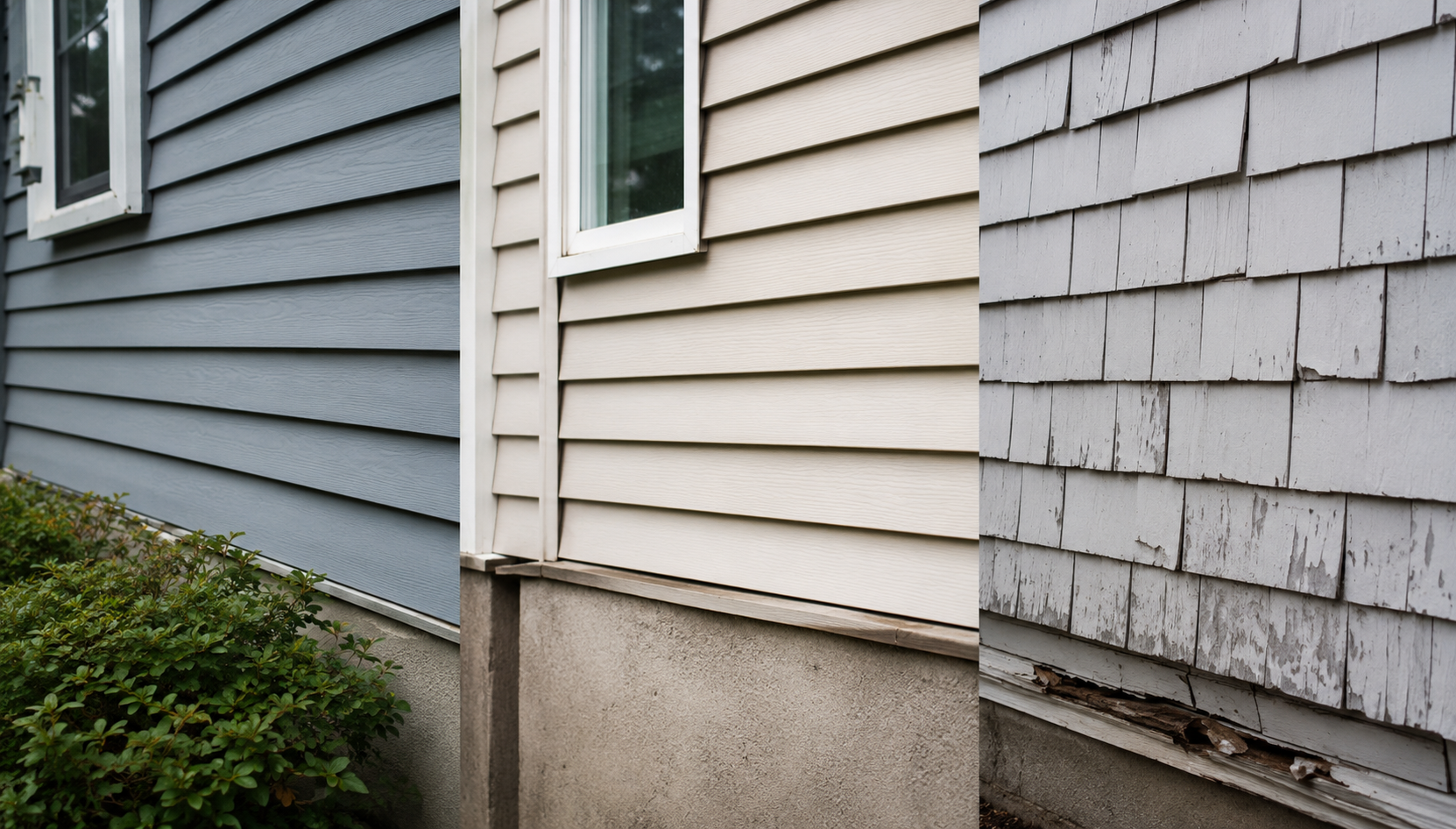
 7 min Read
Siding
Fiber Cement vs. Vinyl vs. Clapboard Siding
Compare common siding options for Massachusetts homes, including durability, maintenance, and long-term value.

Articles
6min Read
A lot of homeowners picture a roof inspection as someone walking around the yard, glancing up, and telling them they need a new roof. That's not what a real inspection looks like.
A proper roof inspection is a documented, system-wide review of everything protecting your home from water: shingles, flashing, chimneys, valleys, ventilation, and the gutters and edges that manage runoff. Most leaks don't start where the stain shows up inside your ceiling, which is exactly why a surface-level look from the ground isn't enough.
This guide walks through what actually happens when Peak Quality Roofing inspects a home in Melrose, Malden, Wakefield, or the surrounding North Shore communities, so you know what to expect before we ever get on the roof.
Most inspection requests come from a specific trigger: a ceiling stain, a missing shingle spotted from the driveway, storm damage, a gutter backing up, or a roof that's simply getting older and hasn't been looked at in years.
The problem is that roofs fail from the top down and the inside out, in places you can't see standing on the ground. A cracked pipe boot, a lifted piece of chimney flashing, or a soft spot in the decking can all be actively letting water in long before it shows up as a stain on your ceiling.
An inspection exists to catch those issues while they're still small and inexpensive to address, and to give you a clear, honest answer about whether your roof needs a repair, a full replacement, or nothing at all right now.

Every inspection starts on the ground. We walk the perimeter of the house and look for early warning signs that tell us where to focus once we're up top: sagging rooflines, granules collecting in the gutters or on the ground, cracked or curling shingles visible from below, staining on the fascia, and any obvious storm or wind damage.
We also ask about your roof's history. Age, any past repairs, known leak locations, and whether the attic has ever shown signs of moisture all shape what we pay closest attention to once the inspection moves onto the roof itself.
This ground-level pass takes just a few minutes, but it sets the direction for the rest of the inspection.

This is the core of the visit, and it's the part that separates a real inspection from a quick glance. We don't just check the shingles. We inspect the entire roofing system, because most leaks in Massachusetts homes originate somewhere other than the shingle field itself.
Here's what's covered on every full system inspection:
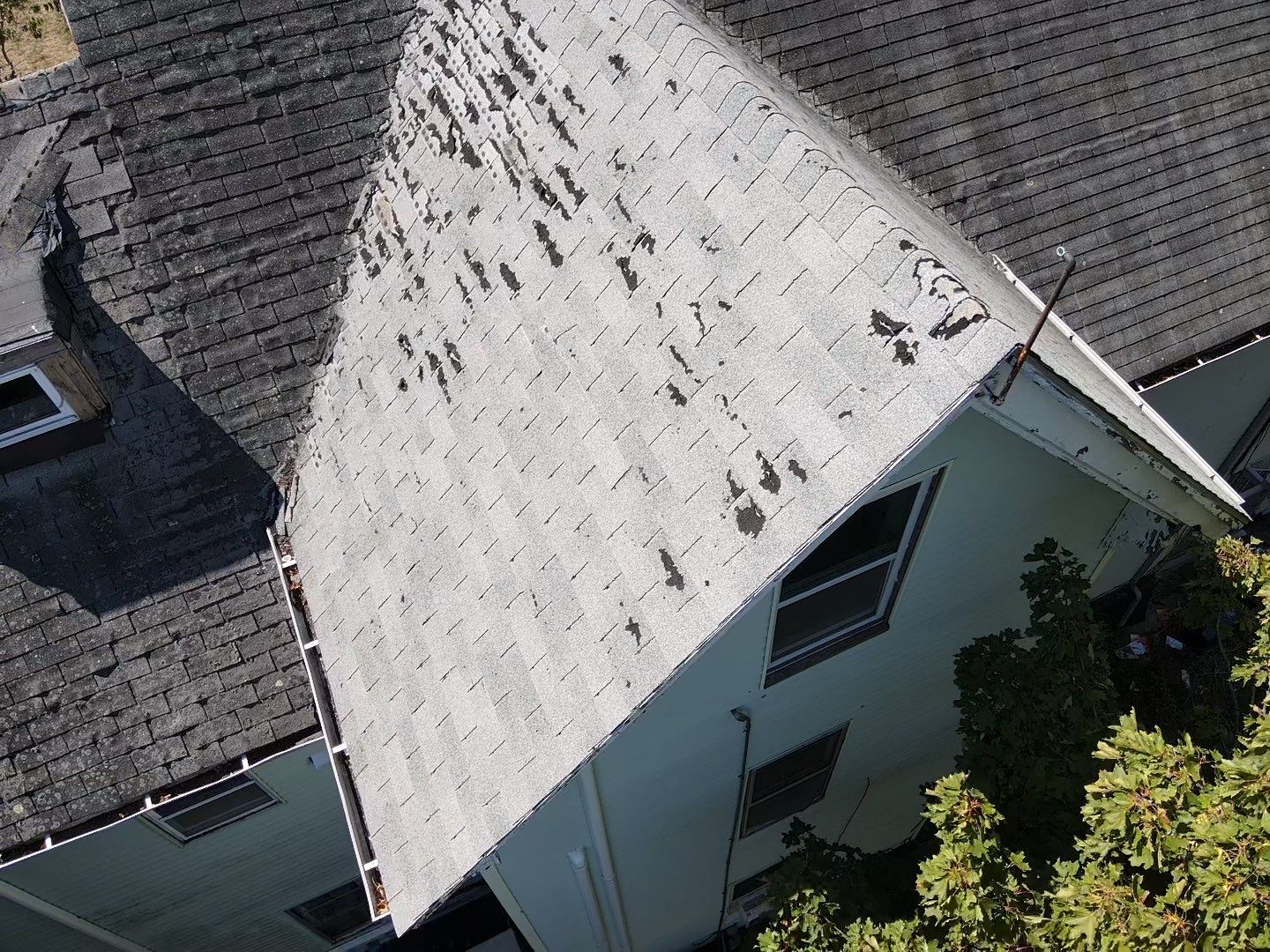
Shingles — missing, cracked, curling, or granule loss that signals the roof is aging out of its useful life.
Flashing — the metal at roof-to-wall transitions, valleys, and chimneys, which is one of the most common places leaks actually start. Our chimney repair work exists largely because of what we find here.
Pipe boots and penetrations — the rubber or plastic seals around vent stacks, which crack and shrink over time and are an easy source of slow leaks that go unnoticed for years.
Ventilation — soffit and ridge vents that keep the attic breathing properly and prevent moisture buildup and ice damming in winter.
Skylights — seals and flashing around any skylights, since these are common leak points on older installations.
Chimneys — masonry condition and the flashing where the chimney meets the roofline.
Valleys — where two roof planes meet and water volume concentrates, making these areas prone to wear.
Roof edges and roof-to-wall transitions — frequent, often-overlooked sources of interior leaks.
Every issue we find gets photographed on the spot. If something looks off, you'll see exactly what we saw, not just a verbal description of it.

What's happening inside the attic tells us as much about roof health as what's happening on top of it. When access allows, we check for signs of moisture, staining on the underside of the decking, insulation that's compressed or damp, and whether the ventilation system is actually doing its job.
Poor attic ventilation is a common contributor to ice damming in Massachusetts winters. Warm air escaping into an under-ventilated attic melts snow on the roof, which then refreezes at the colder eaves and backs water up under the shingles. Catching a ventilation problem here can prevent a much bigger issue down the road.

Gutters, downspouts, fascia boards, and soffits are part of the roofing system, not a separate item, because they're what carries water safely away from the roofline once it leaves the shingles. We check for sagging or pulling gutters, clogs, improper pitch, and any rot or staining on the fascia and soffit that would point to water sitting where it shouldn't. If your gutter system is undersized or failing, it can undermine even a roof that's otherwise in good shape.

Every inspection ends with a Roof Health Report™, not a verbal opinion. Each finding is organized into four parts:
What We Found — the specific issue, documented with photos.
Severity Level — whether it needs attention now, later, or can simply be monitored over time.
Available Options — repair, maintenance, monitoring, or replacement, depending on what the roof actually needs.
Recommended Next Steps — our honest guidance based on the findings, your goals, and your budget.
The report is built so you can see exactly what we see and understand why we're recommending a given course of action, rather than just taking our word for it.

Not every inspection ends in a recommendation to replace the roof. In many cases, the findings point to a targeted repair - resealing a pipe boot, replacing a section of flashing, or addressing a handful of damaged shingles.
Other inspections turn up enough age, wear, or recurring issues that replacement genuinely makes more sense. If that's the direction your roof is heading, our roof replacement cost guide breaks down what drives pricing in Massachusetts, and our repair vs. replacement checklist can help you understand which category your roof falls into before you commit either way.
The point of the report is to give you options, not a sales pitch. Some roofs simply need monitoring, and we'll tell you that too
As a general guideline, an annual inspection is a reasonable baseline for most Massachusetts homes, with a few situations that call for one sooner:
After a major storm, high winds, or hail
Following winter, if ice damming or heavy snow load was a concern
Before listing a home for sale, or after purchasing one
If you notice a ceiling stain, granules in the gutters, or a visibly aging roof
Massachusetts weather is hard on roofs. Between winter ice and snow load, spring storms, and summer heat cycling shingles through expansion and contraction, small issues tend to compound quickly if they aren't caught early.
You don't have to coordinate two separate contractors or guess at how the panels factor into the price. Peak Quality Roofing will inspect your roof and your array's attachment points in person, document everything with photos, and walk you through exactly what the project involves, panel removal, decking, roofing, and reinstallation, in plain terms.
We'll explain your options with no sales pressure and no pushing you toward a bigger project than you actually need.
Schedule your free Roof Health Report today and get real answers for your home.
Call Peak Quality Roofing: 781-650-7458
Service areas: Melrose, Medford, Malden, Stoneham, Wakefield, Everett, Winchester, and nearby North Boston communities.

Written By: Jim Rincon
Jim Rincon is the owner of Peak Quality Roofing, a locally owned roofing company based in Melrose, Massachusetts. Jim and the PQR team help homeowners with roof leak inspections, chimney flashing issues, roof repairs, roof replacement, gutters, siding, skylights, and related exterior work across Melrose and nearby North Boston communities.
7 min Read
Siding
Compare common siding options for Massachusetts homes, including durability, maintenance, and long-term value.
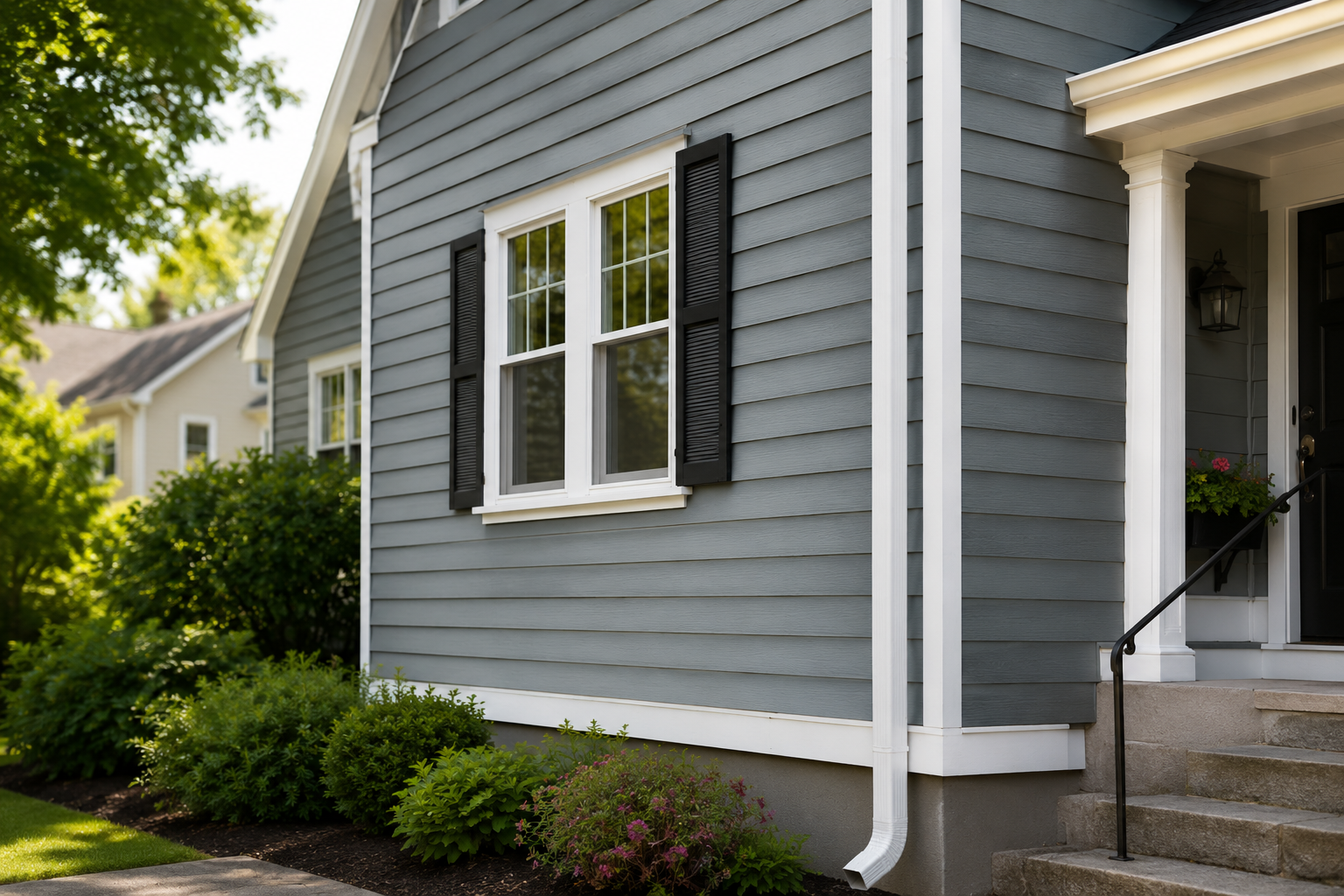 6 min Read
Siding
Learn how siding replacement can affect curb appeal, protection, energy performance, and resale value.
 5 min Read
Roof Leaks
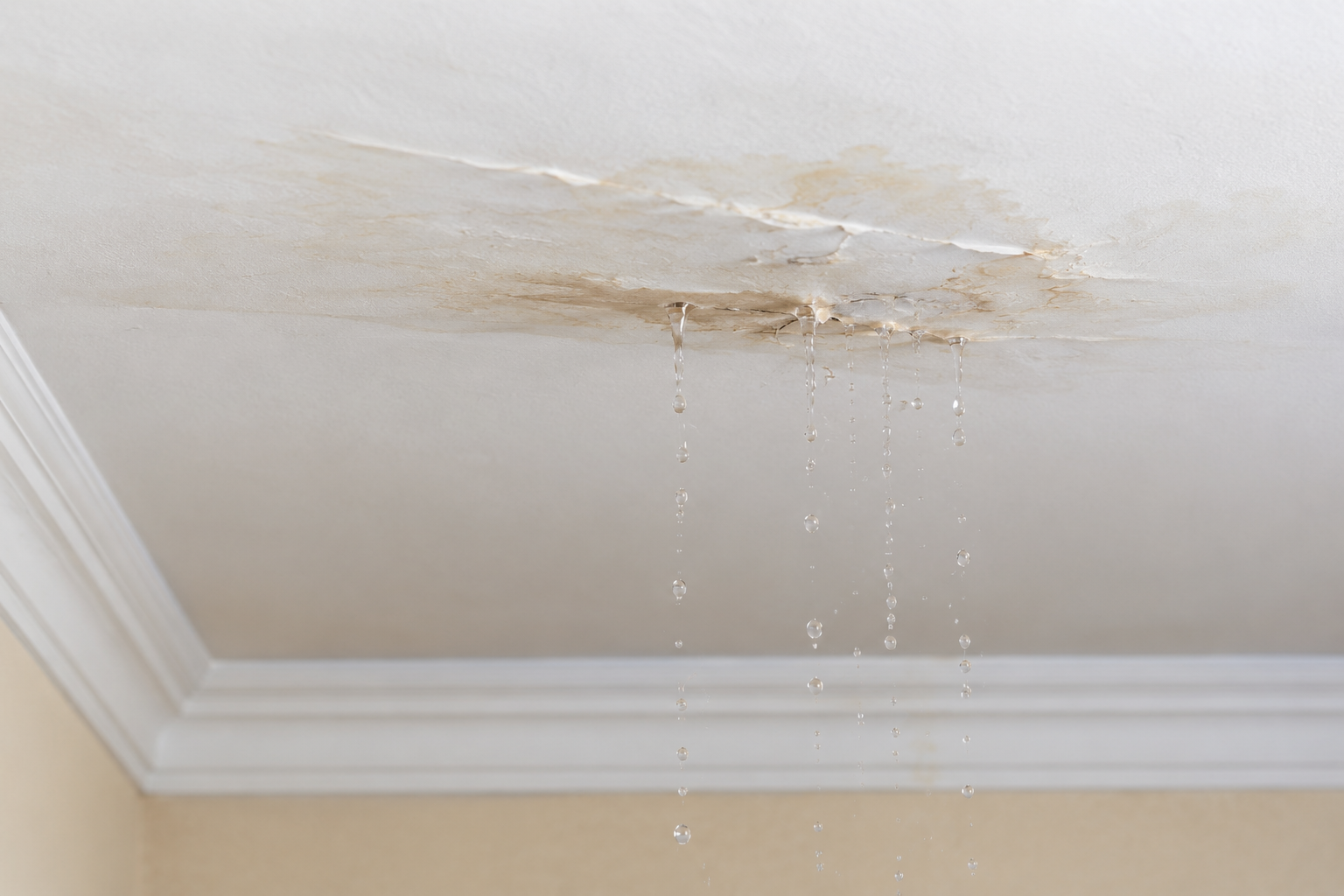
Seeing active water coming in? Here are the first steps to take before the damage gets worse.
Fill out the form below and Peak Quality Roofing will follow up with you.
We provide honest roof inspections and clear reports so you can make confident decisions about your home.




OUR SERVICES
Gutter
Skylight
Snow & Ice Removal
SERVICE LOCATIONS
OFFICE LOCATION
58 Mount Vernon Ave, Melrose, MA 02176


CUSTOMER CARE
OFFICE LOCATION
58 Mount Vernon Ave, Melrose, MA 02176

FOLLOW US ON
Copyright 2025. All rights reserved.
Website by Pure Value Advisors