 7 min Read
Siding
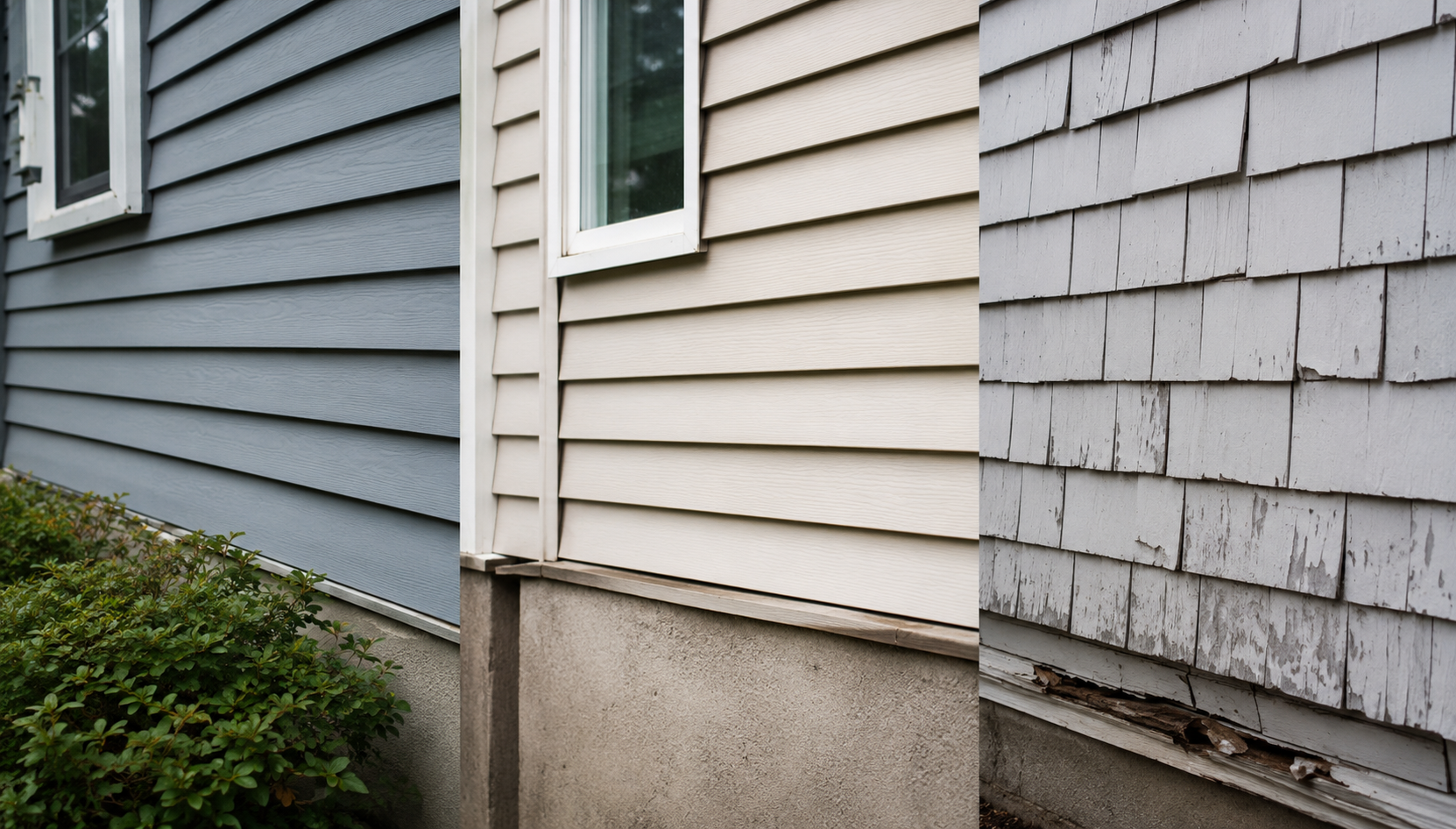
Fiber Cement vs. Vinyl vs. Clapboard Siding
Compare common siding options for Massachusetts homes, including durability, maintenance, and long-term value.

Articles
6min Read
A roof rarely fails all at once. It usually sends warning signs for months, sometimes years, before a leak actually shows up inside the house.
The trouble is that most of those signs are easy to miss from the ground, or easy to write off as "probably fine" until they aren't.
Below are the seven signs we see most often on Massachusetts homes when a roof is nearing the end of its useful life, along with what each one usually means for your timeline and budget.
Most asphalt shingle roofs in Massachusetts last 20–25 years, though that range depends heavily on the quality of the original installation, attic ventilation, and how many New England winters the roof has been through.
Metal roofs last considerably longer, often 40–60 years, while flat roof membranes on additions or porches tend to fall in the 15–20 year range depending on the material.
If your roof is getting close to these numbers, or you're not sure how old it is, the signs below matter more than the calendar.

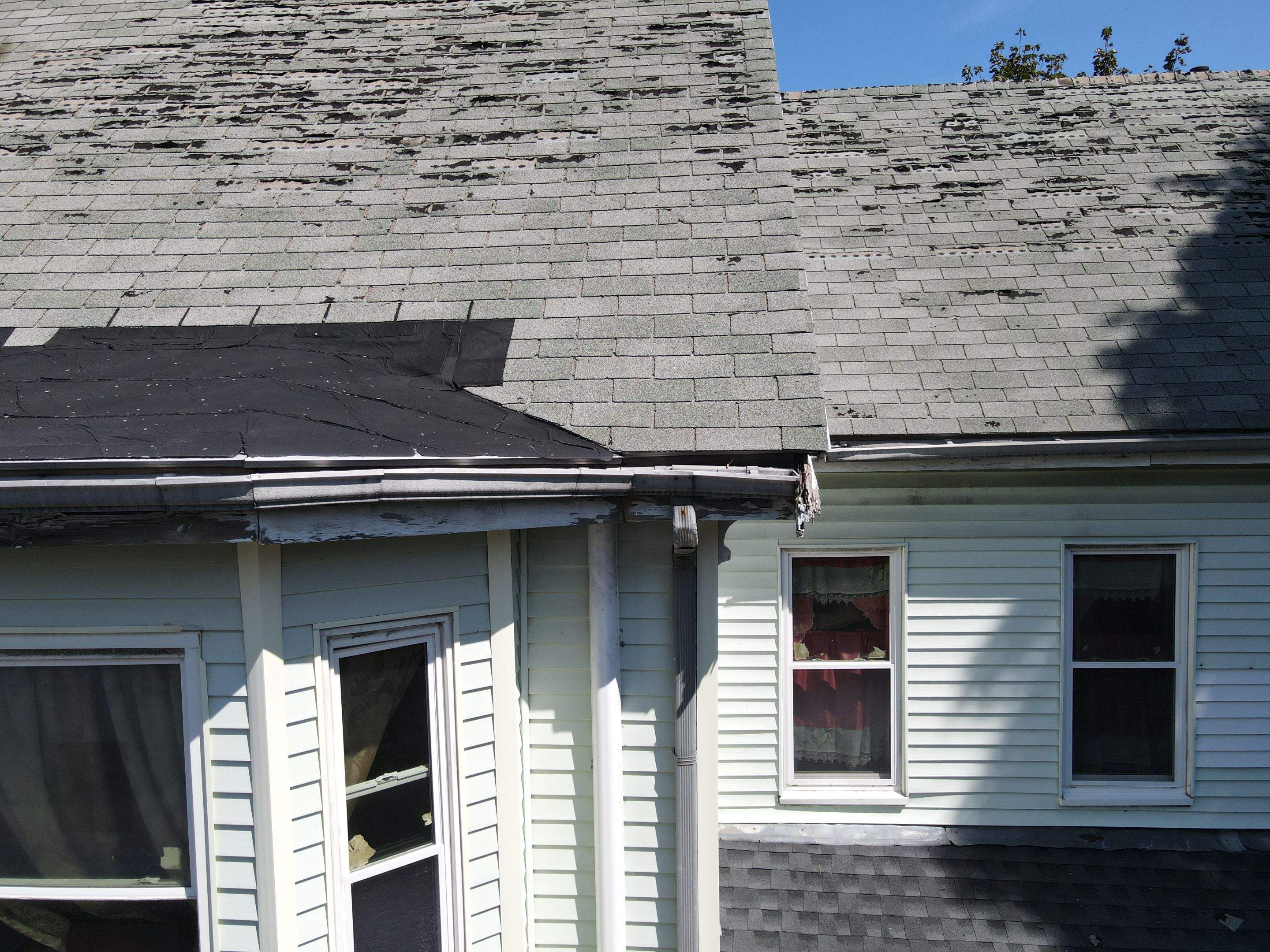
As asphalt shingles age, they lose the oils that keep them flexible. The edges start to curl upward or cup inward, and the surface can crack in the sun.
Granule loss is another early indicator, you'll often see this before anything else, either as bald patches on the shingles themselves or as granules collecting in gutters and downspouts after a hard rain.
Individually, a few curling shingles aren't an emergency. But when it's happening across large sections of the roof, it usually means the whole system is aging out at once, not just a handful of shingles.

If you know your roof's install date and it's within a few years of that 20–25 year asphalt benchmark, that alone is worth a proactive look — even if nothing looks obviously wrong yet.
Roofs installed with only a single layer, proper ventilation, and quality materials tend to age more gracefully than roofs with shortcuts baked in from day one. That's part of why two roofs of the same age can be in very different condition.
This is also where a documented inspection matters more than a guess. Our Roof Health Report gives you a photo-based record of exactly where your roof stands, rather than a rough estimate based on age alone.
Your attic tells you more about your roof's condition than the shingles do, because it shows what's actually getting through.
Signs to look for on a dry, sunny day include: daylight visible through the roof deck, dark staining or streaking on the underside of the sheathing, damp or matted insulation, or a musty smell that wasn't there before.
Any one of these usually means water is finding a way in somewhere, even if you haven't seen a drip inside the living space yet. Chimney flashing is one of the most common entry points we find during these checks, we cover that in more detail in Chimney Flashing Roof Leaks in Massachusetts.

A roofline should be straight. A dip, a wave, or a visible sag between rafters is a sign that the decking underneath has been compromised, usually by prolonged moisture exposure.
From the ground, this can be subtle, it's often easiest to spot by standing back and sighting down the roofline from the street, or by comparing it to a neighboring roof of the same style.
Soft decking isn't something that gets fixed by re-shingling over it. It typically means sections of plywood need to be replaced as part of the project, which is exactly the kind of finding that changes a quote once tear-off begins. For a broader look at what drives cost up or down, see our Massachusetts roof replacement cost guide.

New England storms are hard on roofs. High winds can lift or tear shingles loose, and hail or ice can crack them even when nothing blows off entirely.
A few missing shingles after a big storm isn't unusual and is often a straightforward roof repair rather than a sign the whole roof is done. But if storm damage keeps recurring project after project, that's usually the roofing material itself reaching the point where it can no longer take normal weather stress.
We've laid out how to tell the difference between a one-off repair and a bigger issue in our roof repair vs. replacement checklist.

Flashing, the metal that seals the joints around chimneys, skylights, and roof-to-wall transitions, is one of the most common failure points on an aging roof, even when the shingles themselves still look fine.
Rusted, lifted, or improperly sealed flashing lets water track down into the attic and walls, often well away from where the actual leak started, which makes it tricky to diagnose without a hands-on look.
We've documented this exact issue on real projects, including a chimney flashing and roof leak prevention inspection in Wakefield and a roof and chimney rebuild in Malden. If your chimney is the source, it may need attention on its own, see our chimney repair page for that scope.

An aging roof often loses its ability to regulate attic temperature the way it used to, whether that's from failing ventilation, compressed insulation, or gaps that let conditioned air escape.
If you've noticed higher heating bills without an obvious cause, or if ice dams have become a near-annual event along your eaves, your roof system may not be performing the way it should anymore.
Ice damming has its own set of causes and short-term fixes, which we cover in snow and ice dam removal. But if it's happening every winter regardless of what you do, that's often a sign pointing back to the roof itself rather than just the weather.

One or two of these signs on their own don't necessarily mean you need a full replacement tomorrow. But when several show up together, or when a roof is already close to its expected lifespan, it's worth getting ahead of the problem before it becomes an emergency repair.
We see this pattern play out often in the neighborhoods we work in, which we've written about in more detail in Common Roof Problems We See in Melrose, Malden, Wakefield, and Surrounding Areas.
The most reliable next step is a documented inspection rather than guessing from the ground. Our process is built around exactly that: a photo-based Roof Health Report that lays out what's actually going on, what can wait, and what can't.
If replacement does end up being the right call, we also offer financing options to help spread the cost, and our roof replacement page covers what the process looks like from start to finish.
You don't have to figure that out from the ground or from a stranger's photos online. Peak Quality Roofing will inspect your roof in person, document everything we find with photos, and walk you through exactly what's going on, whether that means a simple repair, a partial fix, or a full replacement.
We'll explain your options in plain terms and help you make an informed decision, with no sales pressure and no pushing you toward a bigger project than you actually need.
Schedule your free Roof Health Report today and get real answers for your home.
Call Peak Quality Roofing: 781-650-7458
Service areas: Melrose, Medford, Malden, Stoneham, Wakefield, Everett, Winchester, and nearby North Boston communities.

Written By: Jim Rincon
Jim Rincon is the owner of Peak Quality Roofing, a locally owned roofing company based in Melrose, Massachusetts. Jim and the PQR team help homeowners with roof leak inspections, chimney flashing issues, roof repairs, roof replacement, gutters, siding, skylights, and related exterior work across Melrose and nearby North Boston communities.
7 min Read
Siding
Compare common siding options for Massachusetts homes, including durability, maintenance, and long-term value.
 6 min Read
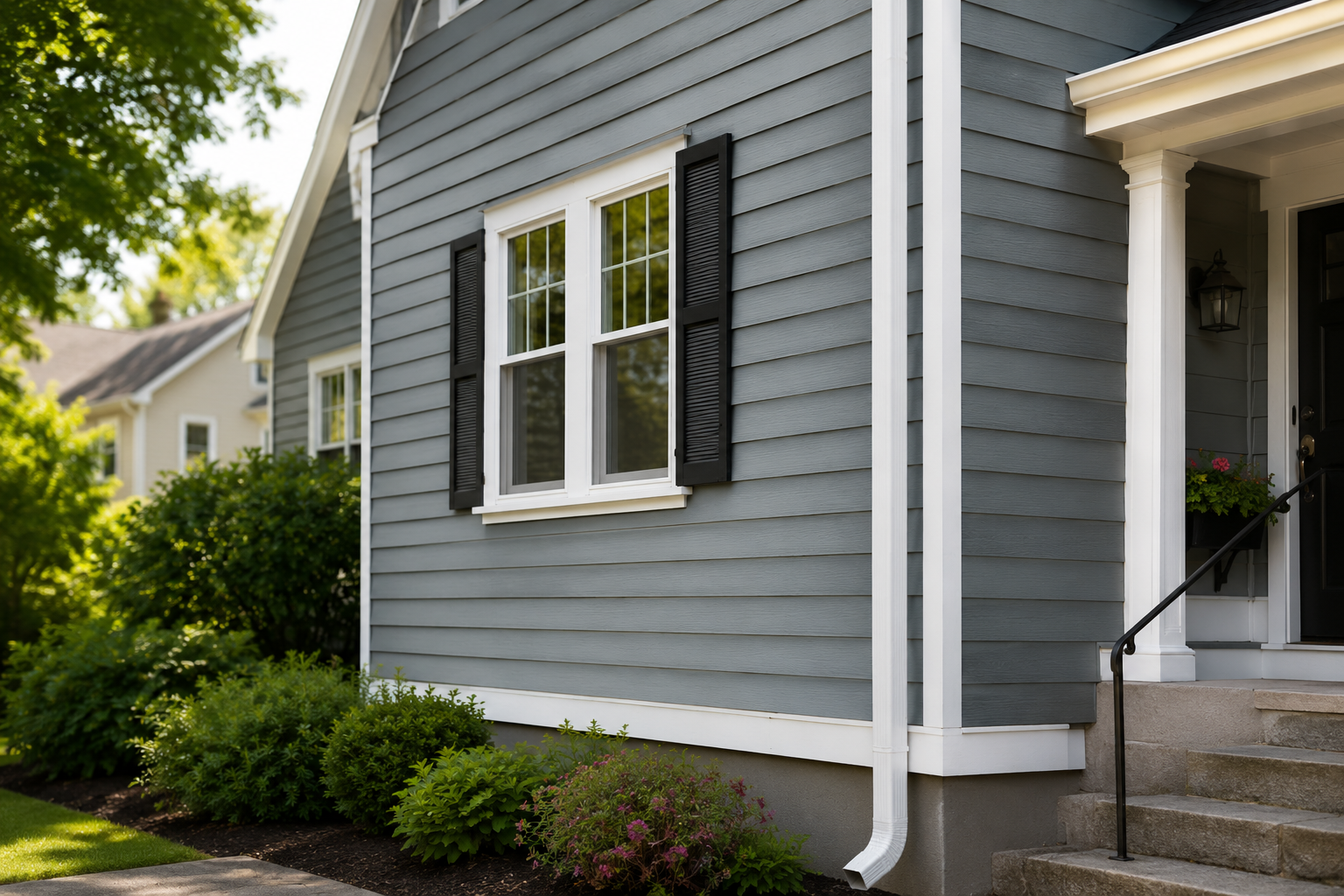
Siding
Learn how siding replacement can affect curb appeal, protection, energy performance, and resale value.
 5 min Read
Roof Leaks
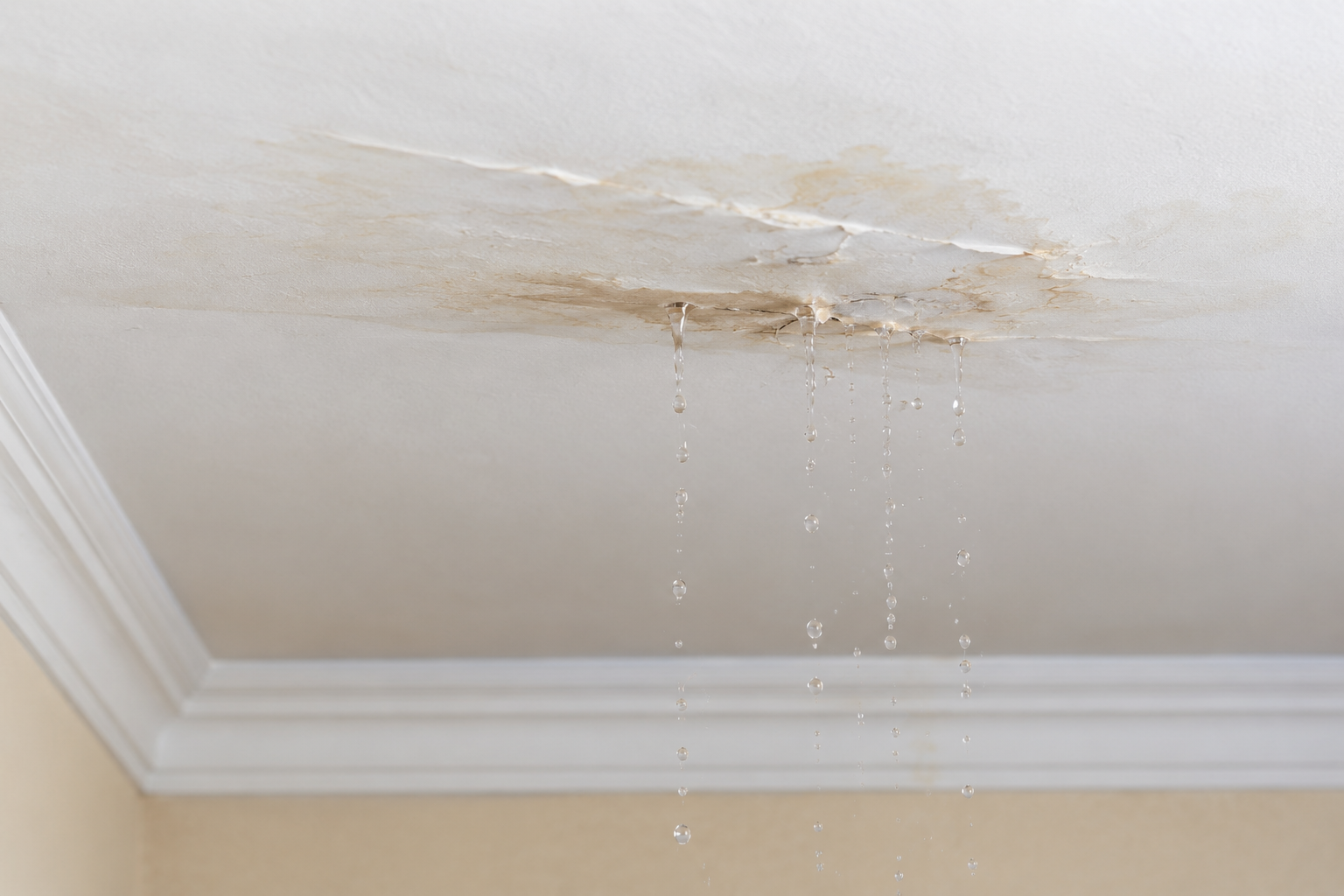
Seeing active water coming in? Here are the first steps to take before the damage gets worse.
Fill out the form below and Peak Quality Roofing will follow up with you.
We provide honest roof inspections and clear reports so you can make confident decisions about your home.




OUR SERVICES
Gutter
Skylight
Snow & Ice Removal
SERVICE LOCATIONS
OFFICE LOCATION
58 Mount Vernon Ave, Melrose, MA 02176


CUSTOMER CARE
OFFICE LOCATION
58 Mount Vernon Ave, Melrose, MA 02176

FOLLOW US ON
Copyright 2025. All rights reserved.
Website by Pure Value Advisors