 7 min Read
Siding
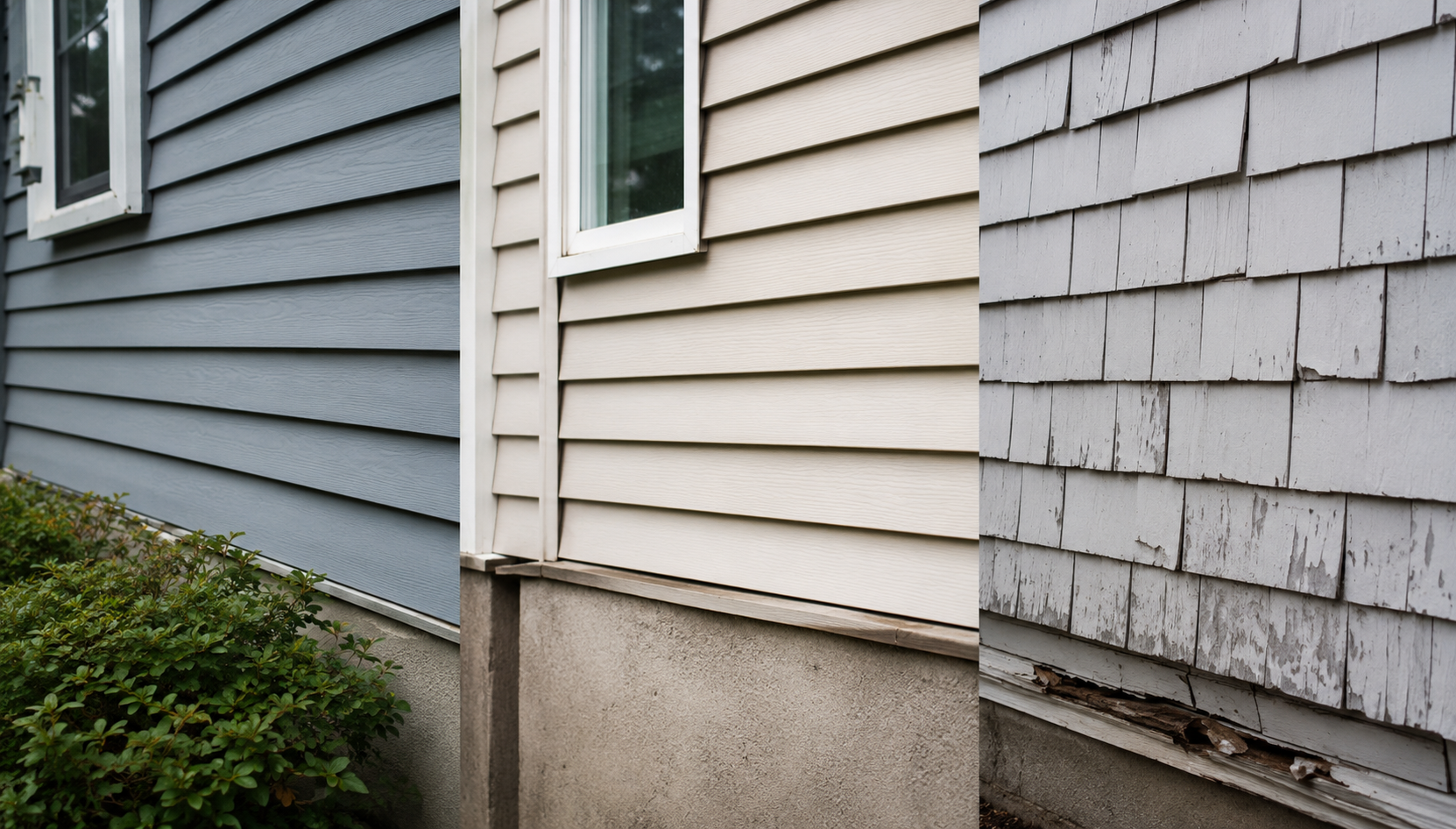
Fiber Cement vs. Vinyl vs. Clapboard Siding
Compare common siding options for Massachusetts homes, including durability, maintenance, and long-term value.

Articles
6min Read
A 25-year asphalt shingle roof and a 25-year-old asphalt shingle roof are not always the same thing. Walk two similar Colonials in Melrose built the same year, and it's common to find one roof still holding up fine while the other already needs a full replacement.
The material label on the shingle bundle is only a starting point. What actually determines how long a roof lasts is a combination of installation quality, attic ventilation, New England winters, sun exposure, and how consistently small problems get caught before they turn into big ones.
This guide walks through the factors that speed up roof aging in Massachusetts, and what homeowners can do to get closer to a shingle's full rated lifespan instead of falling short of it.
Manufacturers rate asphalt shingles for 20 to 30 years, but that number assumes ideal conditions: proper installation, adequate ventilation, and a climate that isn't working against the roof every winter.
Real roofs rarely get ideal conditions. A roof installed without enough attic airflow, or one that sits under overhanging trees, can show serious wear a decade before a well-ventilated, well-maintained roof on the same street.
That gap is why a roof inspection matters more than the roof's age alone when you're trying to figure out how much life is actually left.
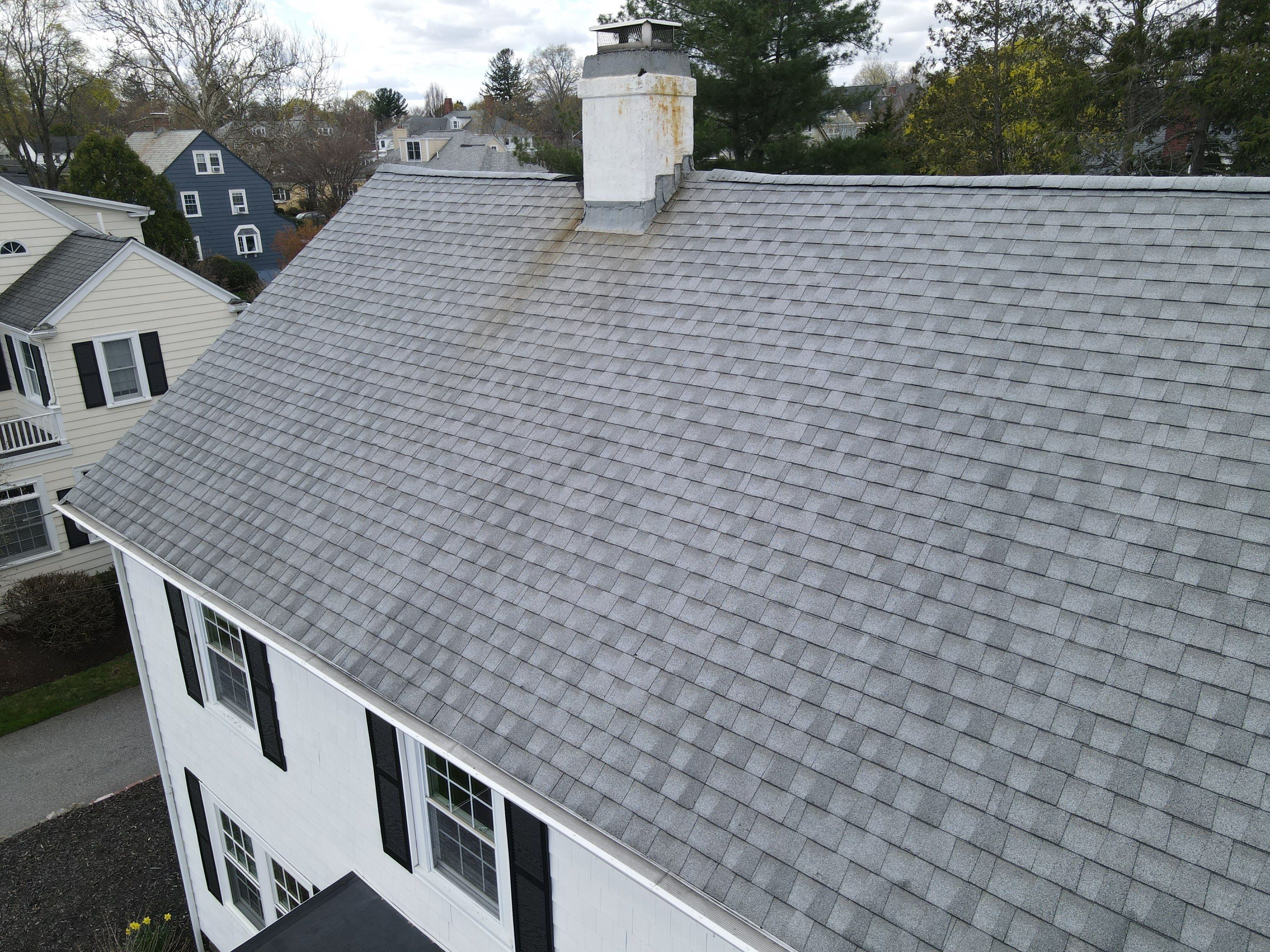
No roof outperforms its installation. Nail placement, flashing details, underlayment choice, and how carefully valleys and penetrations were sealed all determine how much of that manufacturer lifespan a roof can actually reach.
Common installation shortcuts that shorten roof life include:
Shingles nailed too high or too low, which reduces wind resistance and can void material warranties
Reused or reflashed chimney and vent penetrations instead of new flashing
Skipped or undersized ice and water shield along the eaves
Cutting corners on the components that make up a complete roof system rather than treating it as one system
This is also why we walk homeowners through our full replacement process step by step. A roof that's installed correctly the first time ages the way it's supposed to.

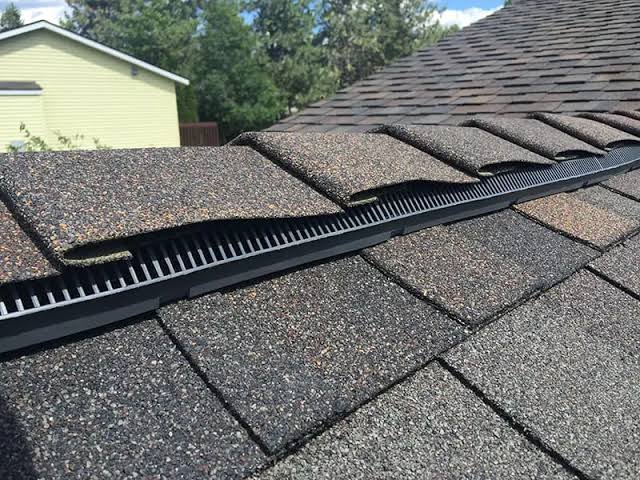
Ventilation is one of the most overlooked factors in roof lifespan, and one of the most damaging when it's missing. Without proper intake and exhaust airflow, heat and moisture build up in the attic year-round.
In summer, trapped heat bakes the underside of shingles, accelerating the breakdown of the asphalt and granules. In winter, that same trapped heat melts snow unevenly on the roof, which is one of the leading causes of ice dams in Massachusetts.
We cover this in more depth in Roof Ventilation: Why It's Part of Every Replacement — it's not an optional add-on, it's a core part of how long a new roof will actually last.
Few climates put more stress on a roof than New England's freeze-thaw cycle. Snow load, repeated freezing and thawing, and ice dams all work against a roof's materials every single winter.
Ice dams in particular can force water backward under shingles, an issue that shows up as leaks that only seem to appear during heavy rain or snowmelt, something we've written about in Why Do Roof Leaks Only Show Up During Heavy Rain?
For homes with a history of ice damming, snow and ice dam removal can reduce the strain on the roof in the short term, but the underlying fix is usually better attic ventilation and insulation.
We've also seen firsthand how repeated winter stress compounds over time, our project documenting a Wakefield roof replacement after multiple roof leaks is a good example of what years of unaddressed winter damage can lead to.
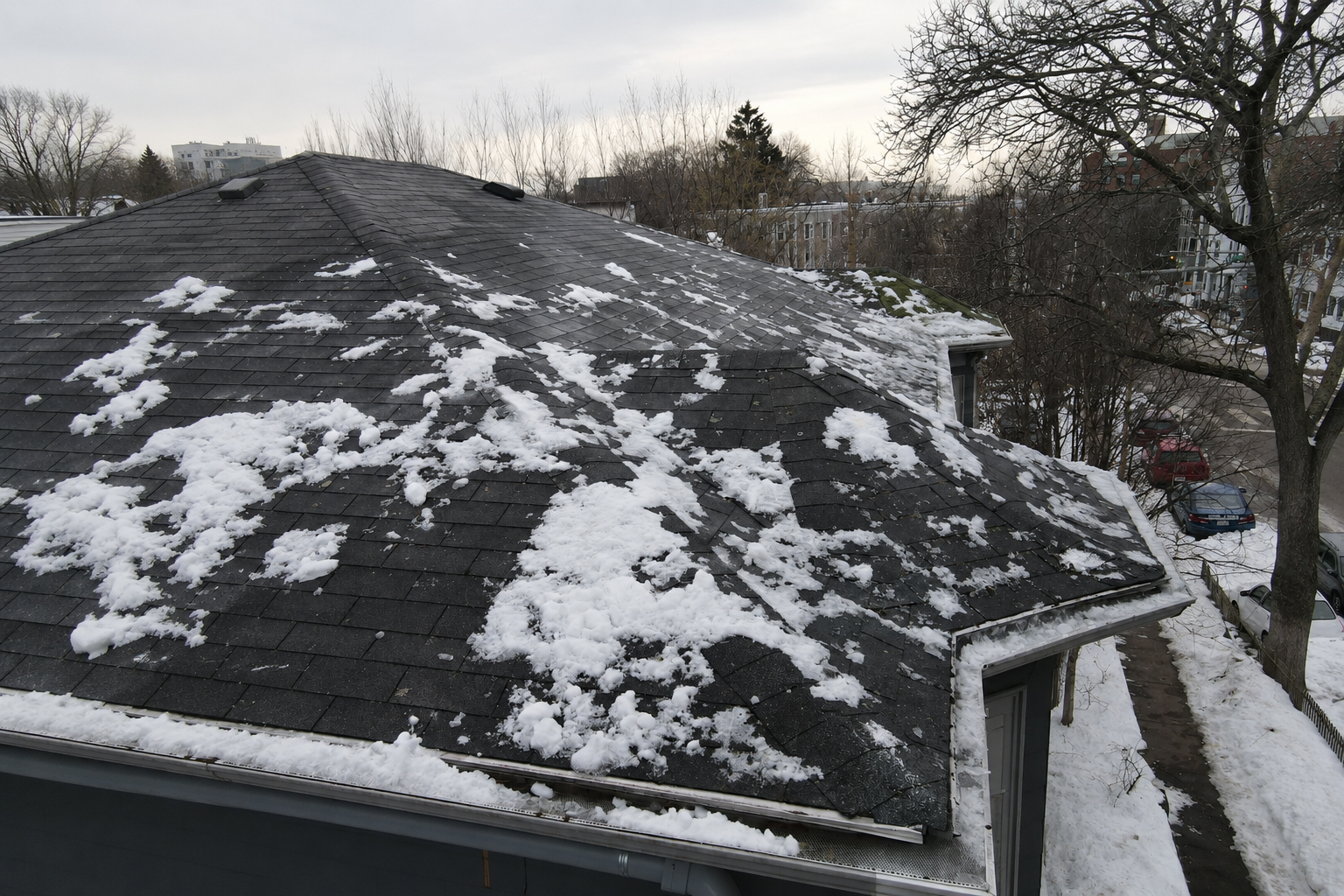
South- and west-facing roof slopes take the most direct sun in Massachusetts, and UV exposure gradually dries out and breaks down asphalt shingles. It's common to see one slope of a roof visibly more worn than the others simply because of which direction it faces.
Steeper pitches tend to shed water and debris faster, which helps, while lower-slope sections hold onto moisture, granule runoff, and organic buildup longer. This is part of why flat and low-slope roofing sections common on additions, porches, and commercial buildings, often need a different maintenance rhythm than the main roof.
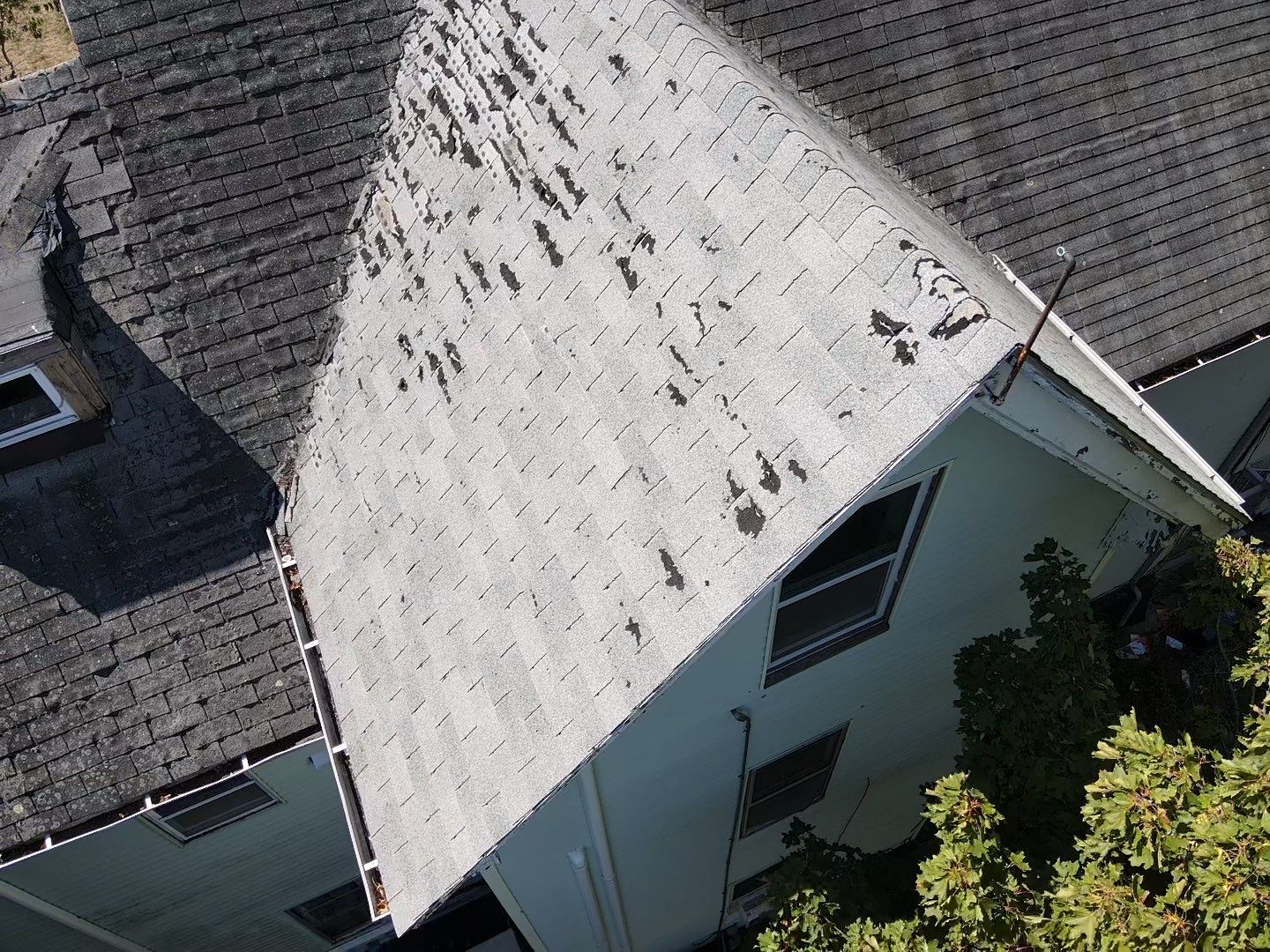
Overhanging branches do more than drop leaves. They keep shaded sections of a roof damp longer after rain, which encourages moss and algae growth that gradually breaks down shingle granules.
Debris that collects in valleys and behind chimneys holds moisture against the roof surface, and clogged gutters make it worse by backing water up under the shingle edge instead of letting it drain. A well-maintained gutter system is a simple, often-overlooked way to protect the roof edge itself.
Chimney areas are a particular trouble spot, we see this often enough that we wrote about it directly in Chimney Flashing Roof Leaks in Massachusetts, and documented a real example in our Wakefield chimney flashing inspection project.
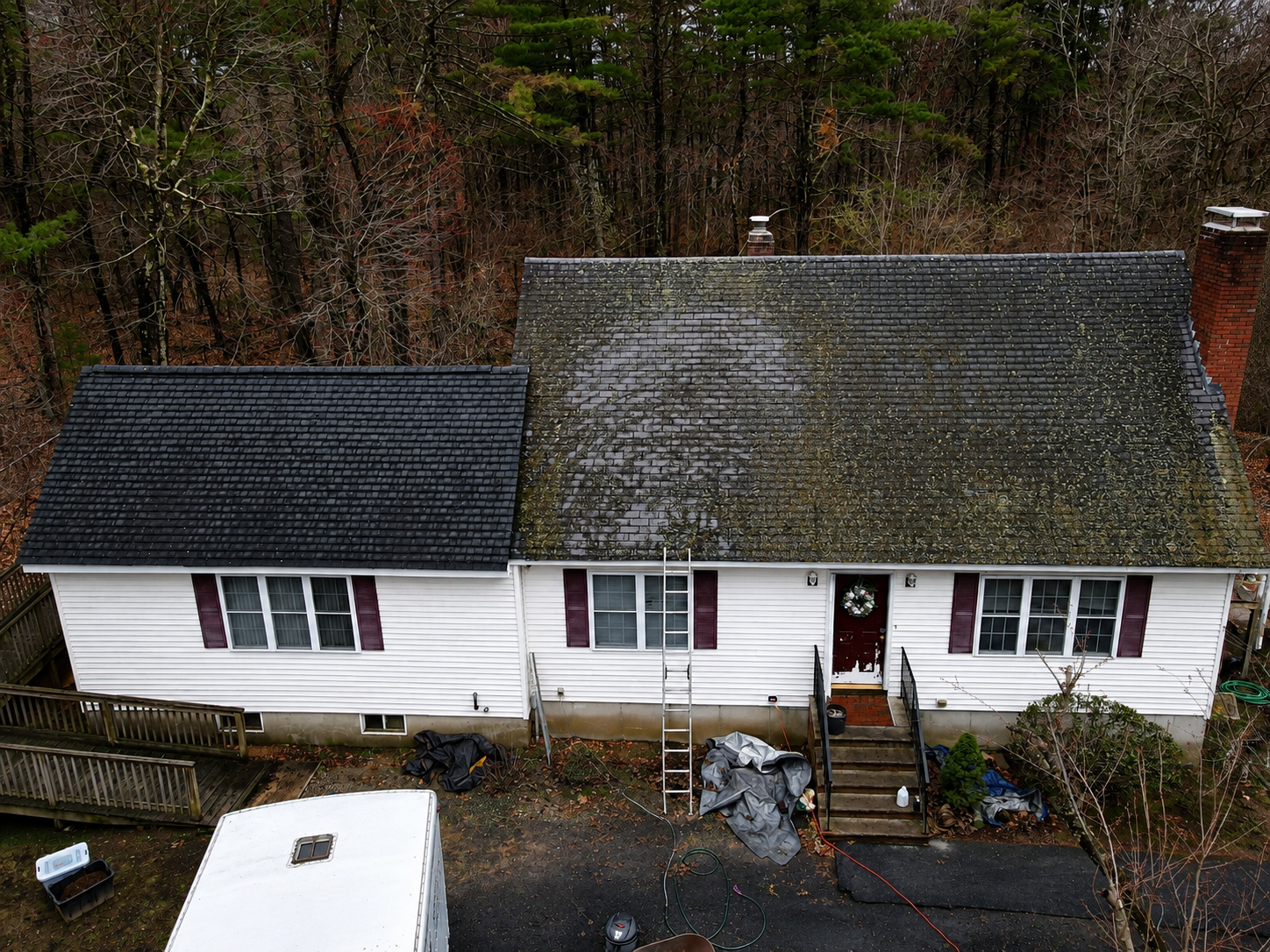
Roofs rarely fail all at once. They fail one missed detail at a time, a lifted shingle after a windstorm, a small flashing gap, a soft spot in the decking that goes unnoticed for a season or two.
Left alone, small issues compound. Water finds its way under shingles, decking softens, and what would have been an inexpensive repair becomes a larger project. Our Roof Repair vs. Replacement Checklist and our article on When Is Roof Repair No Longer Worth It? both walk through how to tell which category a given issue falls into.
This is also where routine inspections earn their keep. A Roof Health Report documents small issues with photos before they become expensive ones including cases like the cupola deterioration we found during a Wakefield inspection, which was caught early enough to address directly.

A few warning signs tend to show up when a roof is deteriorating ahead of schedule:
Granules collecting in gutters or at the base of downspouts
Shingles that look curled, cracked, or unevenly worn from slope to slope
Dark streaking or moss patches that keep coming back
Soft spots or noticeable sagging when walked on
Recurring leaks in the same area, even after minor repairs
We go through these in detail in The 7 Signs Your Roof Is Nearing the End of Its Life, which pairs well with this guide if you're trying to figure out where your own roof stands.
If you're in Melrose, Malden, Wakefield, or a nearby community, our article on common roof problems we see in the area breaks down which of these issues tend to show up most often locally.

None of these factors are fully avoidable in a Massachusetts climate, but their impact can be significantly reduced:
Have ventilation checked whenever a roof is inspected or replaced, not just when shingles are visibly failing
Keep gutters and valleys clear of leaves and debris, especially in the fall
Trim back overhanging branches to reduce shade and moisture retention
Address small repairs — lifted shingles, minor flashing gaps — as soon as they're found
Schedule a professional inspection every year or two, even without visible problems
At some point, a roof that's aged faster than expected crosses from "repairable" into "replace it." That line usually depends on how widespread the wear is, how the decking underneath has held up, and how many years of usable life are realistically left.
If you're weighing that decision, our Massachusetts Roof Replacement Cost Guide for 2026 breaks down what a full replacement typically runs, and financing options are available if the timing doesn't line up with the budget.
You don't have to guess based on age alone. Peak Quality Roofing will inspect your roof in person, document everything we find with photos, and give you a straight answer on whether you're looking at a repair, a partial fix, or a full replacement.
We'll explain your options in plain terms and help you make an informed decision, with no sales pressure and no pushing you toward a bigger project than you actually need.
Schedule your free Roof Health Report today and get real answers for your home.
Call Peak Quality Roofing: 781-650-7458
Service areas: Melrose, Medford, Malden, Stoneham, Wakefield, Everett, Winchester, and nearby North Boston communities.

Written By: Jim Rincon
Jim Rincon is the owner of Peak Quality Roofing, a locally owned roofing company based in Melrose, Massachusetts. Jim and the PQR team help homeowners with roof leak inspections, chimney flashing issues, roof repairs, roof replacement, gutters, siding, skylights, and related exterior work across Melrose and nearby North Boston communities.
7 min Read
Siding
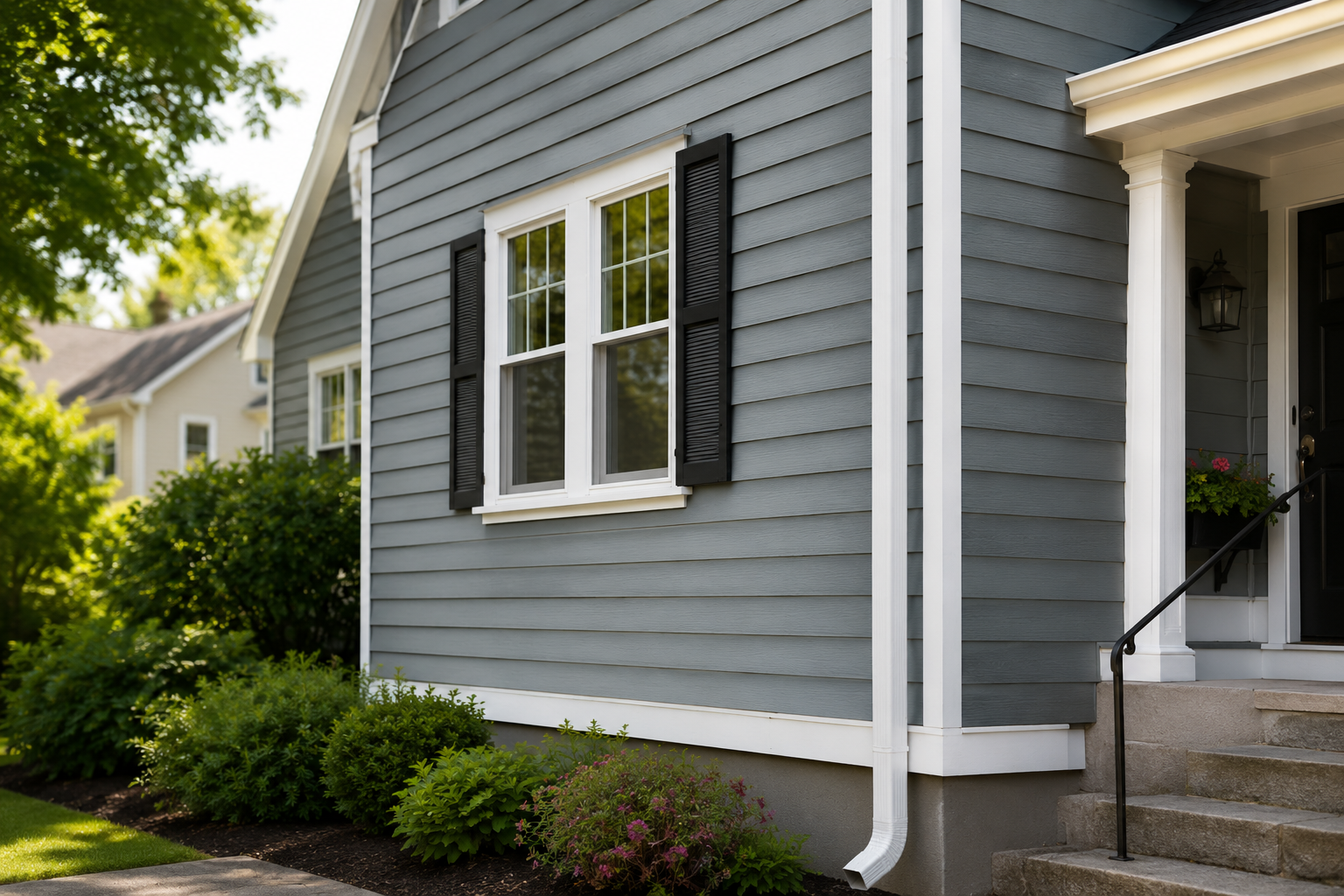
Compare common siding options for Massachusetts homes, including durability, maintenance, and long-term value.
 6 min Read
Siding
Learn how siding replacement can affect curb appeal, protection, energy performance, and resale value.
 5 min Read
Roof Leaks
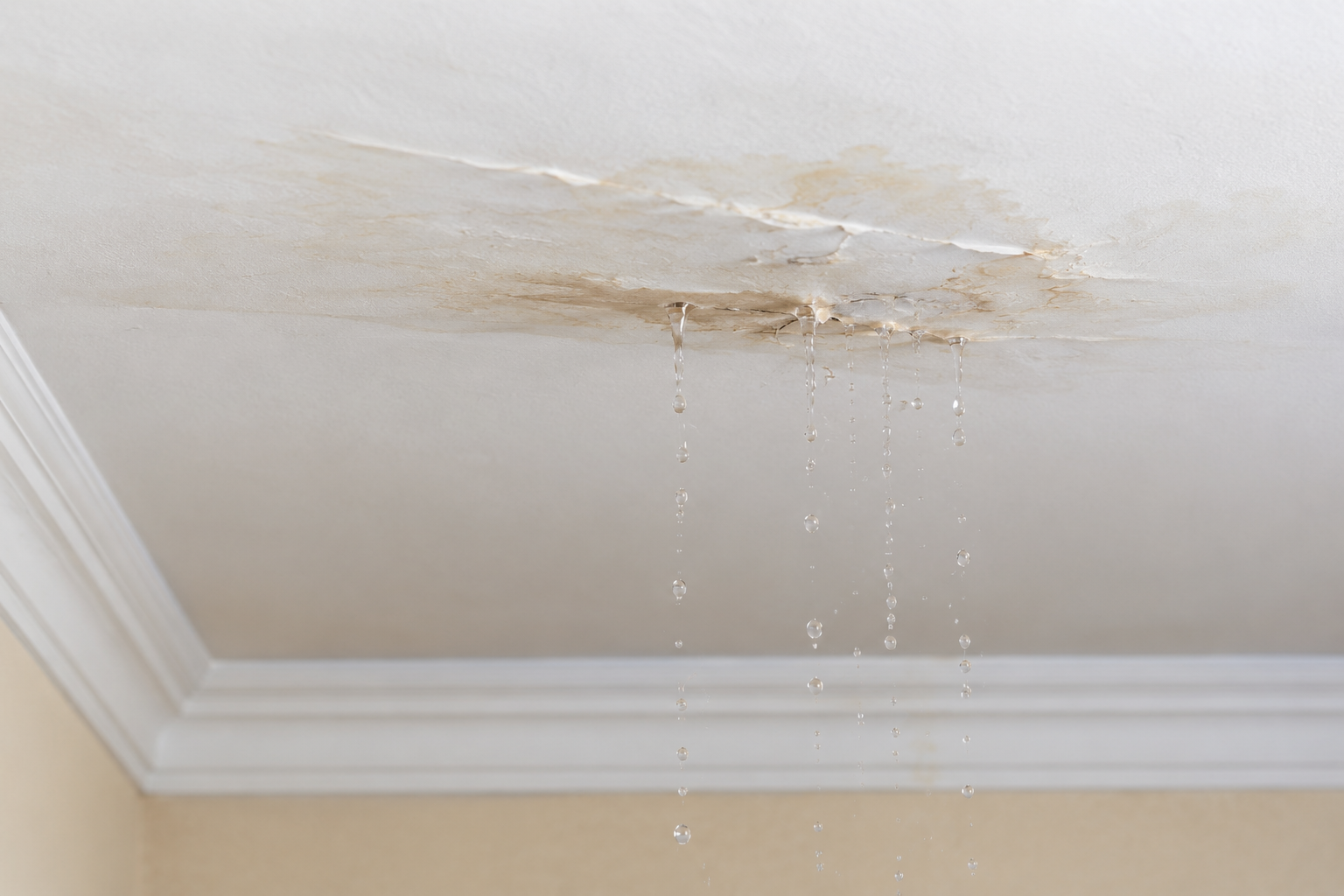
Seeing active water coming in? Here are the first steps to take before the damage gets worse.
Fill out the form below and Peak Quality Roofing will follow up with you.
We provide honest roof inspections and clear reports so you can make confident decisions about your home.




OUR SERVICES
Gutter
Skylight
Snow & Ice Removal
SERVICE LOCATIONS
OFFICE LOCATION
58 Mount Vernon Ave, Melrose, MA 02176


CUSTOMER CARE
OFFICE LOCATION
58 Mount Vernon Ave, Melrose, MA 02176

FOLLOW US ON
Copyright 2025. All rights reserved.
Website by Pure Value Advisors